Talking Data Equity with Mickey McGlasson from CREATE Labs
Talking Data Equity with Mickey McGlasson from CREATE Labs
One of the questions we followed up with was about privacy and the Gigacam. Here’s Mickey’s reply: The Gigapan privacy thing is a reasonable question that we wrestle with. The Gigapan website, gigapan.com, has some formal consent language, if you think that’s helpful, but my general response is that we try to preserve a reasonable expectation of privacy in any image that we use ourselves for educational purposes — i.e., like with Obama’s inauguration we would ask students to look at specific public figures on the platform but not, for instance, try to identify anonymous members of the public in the crowd. But it is a fair concern, and we would never try to draw attention to people in private or unexpected settings.
Talking Data Equity with Dr. Kamden Strunk

slides!
Talking Data Equity: From Loss to Legacy (Part 2). The story of saving the USAID Education Data and What Comes Next.
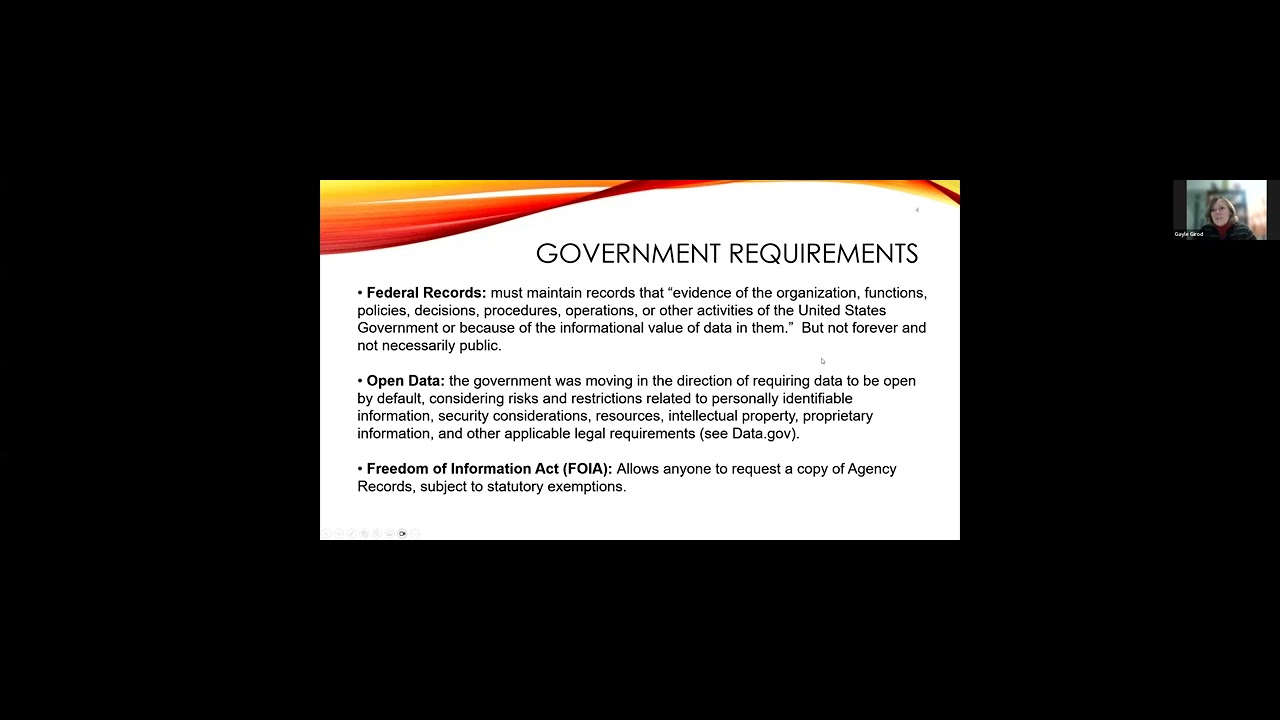
Resource links:
https://www.congress.gov/crs-product/IN12502
https://www.hhs.gov/ohrp/regulations-and-policy/regulations/common-rule/index.html
Talking Data Equity with Isabel Algrant & Amy Hawn Nelson from AISP
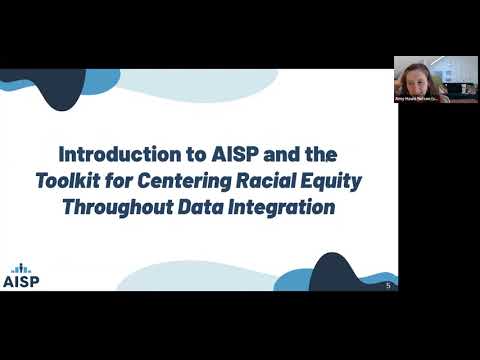
Slides with links to resources
As promised, here is the list of readings that Dr. Strunk includes with his course:
Foundations / Sociohistorical Context
Gottesman, I. (2016). Revolutionary moments. In The critical turn in education (pp. 9–30).
Gottesman, I. (2016). Political economy and the academic left. In The critical turn in education (pp. 31–51).
Collins, D. R., & Cannella, G. S. (2021). Racisms in qualitative inquiry. Qualitative Inquiry, 27(10), 1139–1145.
Donmoyer, R. (2024). The paradigm wars reconsidered. In Young & Diem (Eds.), Handbook of critical education research (pp. 39–55).
Strunk, K. K. (2024). Critical approaches to quantitative research. In Young & Diem (Eds.), Handbook of critical education research (pp. 56–74).
De/Colonizing Approaches
Tuck, E., & Yang, K. W. (2012). Decolonization is not a metaphor. Decolonization: Indigeneity, Education & Society, 1(1), 1–40.
Pillow, W. S. (2019). Epistemic witnessing. International Journal of Qualitative Studies in Education, 32(2), 118–135.
Leonardo, Z., Singh, M. V., & Delgado Noguera, Z. (2024). Education and colonialism. In Young & Diem (Eds.), Handbook of critical education research (pp. 103–121).
Cutler, K. D., & Liou, D. D. (2024). Decoloniality content analysis. In Young & Diem (Eds.), Handbook of critical education research (pp. 715–734).
Indigenous Methodologies
Beck, N. (2018). Troubling the translating. In Winkle-Wagner et al. (Eds.), Critical theory and qualitative data analysis in education (pp. 46–51).
Walter, M., & Andersen, C. (2013). The paradigm of Indigenous methodologies. In Indigenous statistics (pp. 58–81).
Walter, M., & Andersen, C. (2013). Naryi kati (“good numbers”). In Indigenous statistics (pp. 82–110).
McKinley, B., Brayboy, J., & Chin, J. (2018). Tribal critical race theory. In DeCuir-Gunby et al. (Eds.), Understanding critical race research methods (pp. 51–63).
Critical Theory
Gottesman, I. (2016). Ideology and hegemony. In The critical turn in education (pp. 52–73).
Gottesman, I. (2016). Critical pedagogy. In The critical turn in education (pp. 74–93).
Strunk, K. K., & Betties, J. S. (2019). Using critical theory in educational research. In Strunk & Locke (Eds.), Research methods for social justice and equity (pp. 71–80).
Duncan-Andrade, J. M., & Morrell, E. (2008). Youth participatory action research. In The art of critical pedagogy (pp. 105–131).
Critical Race Theory & QuantCrit
Gottesman, I. (2016). Critical theories of race. In The critical turn in education (pp. 116–137).
Sung, K. K., & Coleman, N. (2019). Framing CRT methodologies. In Strunk & Locke (Eds.), Research methods for social justice and equity (pp. 45–58).
Dixson, A. D., James, A., & Frieson, B. L. (2018). Taking it to the streets. In DeCuir-Gunby et al. (Eds.), Understanding critical race research methods (pp. 64–75).
Stovall, D. (2018). Jazz methodology and CRT. In DeCuir-Gunby et al. (Eds.), Understanding critical race research methods (pp. 76–85).
Winkle-Wagner, J., Sulé, V. T., & Maramba, D. C. (2018). CRT policy analysis. In Critical theory and qualitative data analysis in education (pp. 193–204).
DeCuir-Gunby, J. T. (2020). Critical race mixed methodology. Educational Psychologist, 55(4), 244–255.
Teranishi, R. T. (2007). Critical quantitative research. New Directions for Institutional Research, 133, 37–49.
Garcia, N. M., Velez, V. N., & Huber, P. L. (2022). Critical race feminista quantitative praxis. Equity & Excellence in Education, 56(1–2), 190–205.
Castillo, W., & Gillborn, S. (2025). Leveraging QuantCrit. Educational Psychologist, 60(4), 301–316.
Velez, V. N., & Garcia, N. M. (2024). QuantCrit spatial research. In Young & Diem (Eds.), Handbook of critical education research (pp. 695–714).
Feminist Approaches
Gottesman, I. (2016). Feminist standpoint epistemology. In The critical turn in education (pp. 94–115).
Lather, P. (2008). (Post)feminist methodology. International Journal of Qualitative Research, 1(1), 55–64.
St. Pierre, E. A. (2000). Poststructural feminism. Qualitative Studies in Education, 13(5), 477–515.
Toliver, S. R. (2022). Womanist discourse analysis. Equity & Excellence in Education, 56(1–2), 206–220.
Queer Theory & Methodologies
Butler, J. (1993). Critically queer. GLQ, 1, 17–32.
Blockett, R. A. (2018). Queer of Color critique. In Critical theory and qualitative data analysis in education (pp. 109–123).
Nicolazzo, Z. (2017). Trans* epistemology. Urban Education, 56(3), 511–536.
Mayo, C., & Rodriguez, N. M. (2019). Queer pedagogies. In Queer pedagogies (pp. 1–8).
Strunk, K. K. (2024). QuantQueer. Educational Studies, 60(1), 5–18.
Shannon-Baker, P. (2021). Queering mixed methods research. In Encyclopedia of queer studies in education.
Cisneros, J. (2018). Undocuqueer meaning making. Journal of Homosexuality, 65(11), 1415–1434.
Shelton, S. A., & Lester, A. O. (2018). Trans youth narratives. Sex Education, 18(4), 391–405.
Dis/Ability Studies
Erevelles, N. (2019). Disability and intersectionality. Educational Studies, 55(6), 592–605.
Loutzenheiser, L. W., & Erevelles, N. (2019). Crippin’ educational studies. Educational Studies, 55(4), 375–386.
Annamma, S. A., Connor, D., & Ferri, B. (2013). DisCrit. Race Ethnicity and Education, 16(1), 1–31.
Annamma, S. A. (2017). Education journey mapping. Qualitative Inquiry, 24(1), 20–34.
Parekh, G. (2024). Critical disability quantitative inquiry. In Young & Diem (Eds.), Handbook of critical education research (pp. 414–429).
Participatory & Engaged Methods
Caraballo, L. et al. (2017). YPAR and critical epistemologies. Review of Research in Education, 41, 311–336.
Desai, S. R. (2019). YPAR in practice. In Strunk & Locke (Eds.), Research methods for social justice and equity (pp. 124–136).
Walls, J., & Holquist, S. E. (2019). Photo-elicitation methods. In Strunk & Locke (Eds.), Research methods for social justice and equity (pp. 151–162).
Andrzejewski, C. E., Arnberg, B., & Baggett, H. C. (2019). Transformative mixed methods. In Strunk & Locke (Eds.), Research methods for social justice and equity (pp. 241–253).
Heinecke, W. et al. (2024). Community-engaged research. In Young & Diem (Eds.), Handbook of critical education research (pp. 334–355).
Critical Policy & Organizational Analysis
Allan, E. J. (2010). Feminist poststructural policy analysis. In Reconstructing policy in higher education (pp. 11–35).
McCambly, H., & Mulroy, Q. (2024). Racialized quality politics. Educational Evaluation and Policy Analysis, 46(2), 192–221.
Ray, V. (2019). Racialized organizations. American Sociological Review, 84(1), 26–53.
McCoy-Simmons, C., Orphan, C. M., & Gándara, D. (2023). Policy intermediaries and racism. Educational Policy, 37(6), 1672–1699.
Talking Data Equity with Danica Shipley on Responsible AI
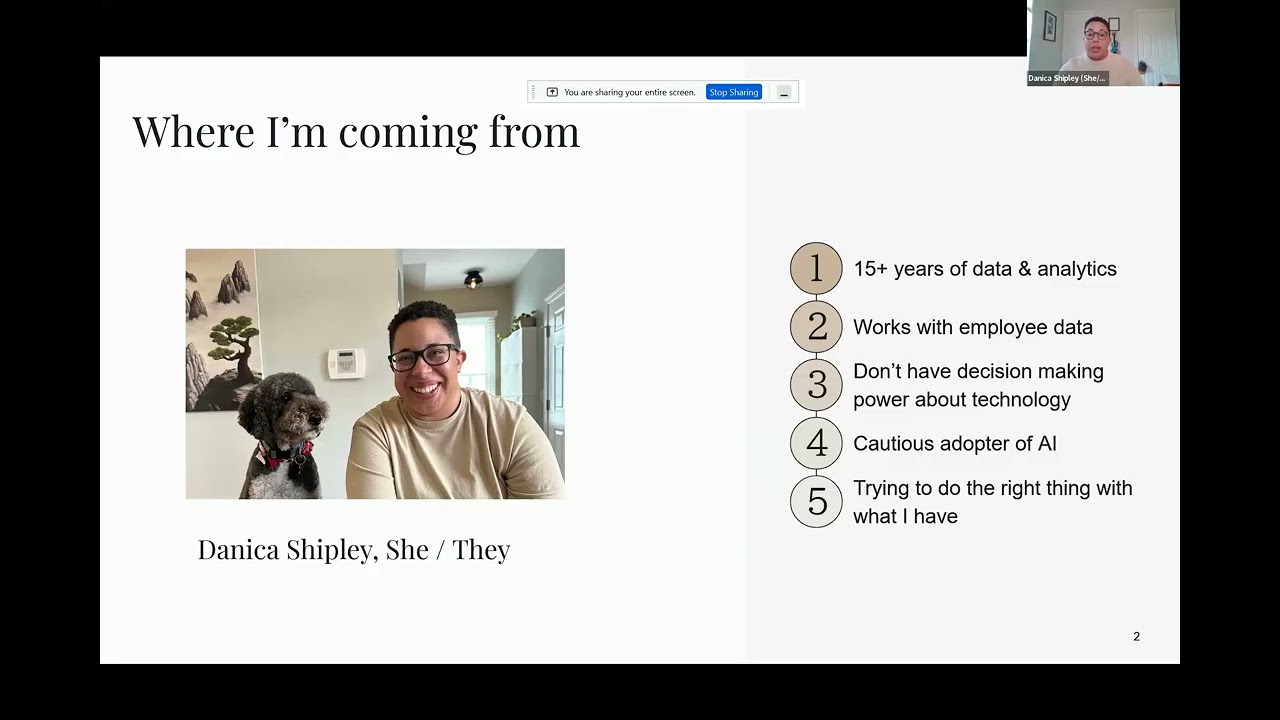
Here are the slides & resource links
Responsible AI Adoption.pdf (723.0 KB)
Just completed the Foundations Course and loved it; can’t wait to listen again - for realz! - just to really anchor and organize the information. Also signed up for Talking Data Equity and noticed that the time zone refers to itself as “America” which, in terms of equity seems a little problematic. America, all north, central, and south of it has more than one time zone versus New York which only is a small part of the US which is only a small part of America.
Hey there @sheppard I’m so happy to hear that you’re going to join us for some Talking Data Equity. You participation was so valuable in Foundations. Thanks for sharing your concerns about the time zone. The use of America/New York for a time zone by our calendar company is denoting a nested geographical structure. The calendar link is set up to show you the time in the geography of the location of the user - first displaying a large geography (America) and then displaying a smaller geography (New York) with a specific time zone. For example, for users in London England it will show Europe/London. Looking forward to talking to you soon.
Talking Data Equity with Beth Jarosz and Denice Ross
Links to resources shared by Beth and Denice as well as in the chat by participants:
Terminated advisory committee list: FACA Terminations - Google Docs
Terminated datasets and tools (incl HIFLD): In Memoriam | America's Essential Data
Some context on food security: Uncovering Additional Threats to Food Security Data: Why the “Redundancy” Claim Doesn’t Hold Up | America's Data Index
The Data Rescue Project organizes the archiving! They have a lively community of volunteers. https://www.datarescueproject.org/
Essential Data: https://essentialdata.us/
dataindex newsletter: https://dataindex.us/newsletter/
APDU newsletter: Association of Public Data Users
Federal Data Forum: Discussion - Federal Data Forum
Census Road Map: https://censusroadmap.org/
Data Rescue Project backed up: Beyond Preservation: Stewarding America’s Critical HIFLD Infrastructure Data — Data + Screening Tools
The R package for computing SVI: Introduction to findSVI
Talking Data Equity with Jonathan W. Gray
Talking Data Equity with Eveylyn McCoy
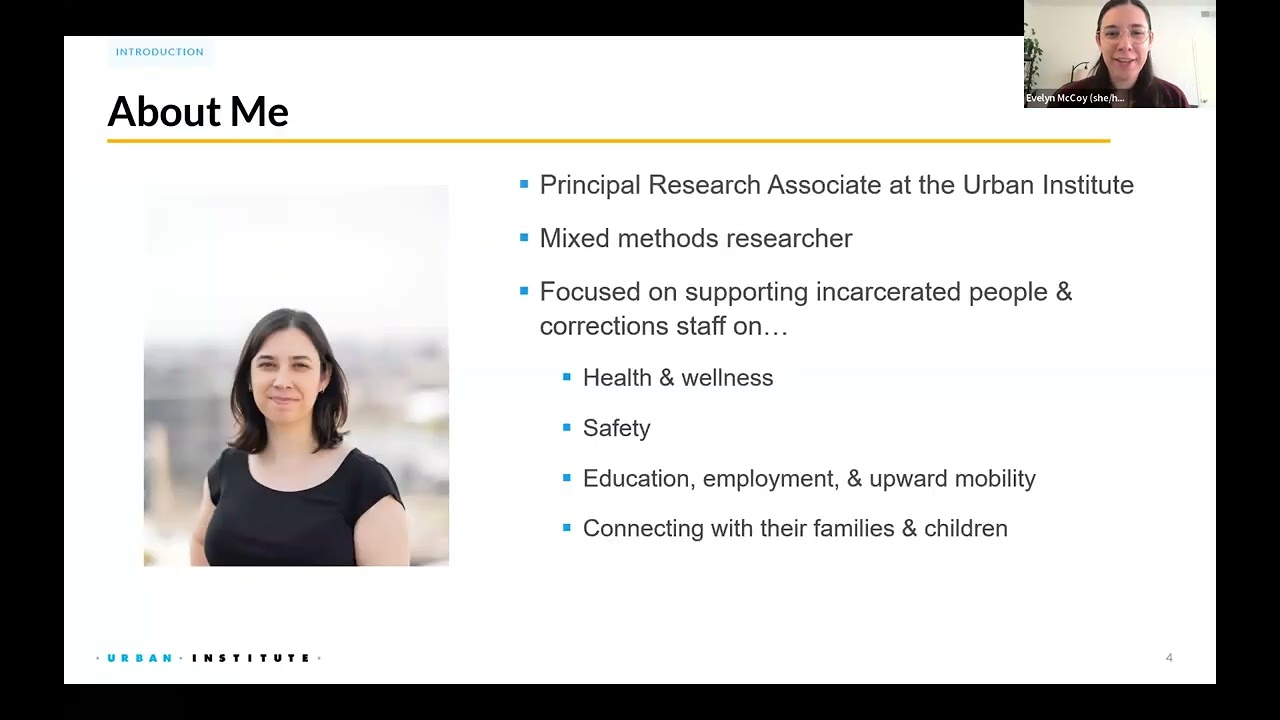
Here are the slides and lots of resources:
This is the source for the charts:
https://www.prisonpolicy.org/reports/pie2026.html
What We Learned about Participatory Research in Prisons: Evaluating the Prison Research and Innovation Initiative, https://www.urban.org/research/publication/what-we-learned-about-participatory-research-prisons
Living and Working Conditions in Five State Prisons: According to Incarcerated People and Corrections Staff, https://www.urban.org/research/publication/living-and-working-conditions-five-state-prisons
How Do Incarcerated People in Five State Prisons View Prison Conditions? Findings from the Prison Research and Innovation Initiative, https://www.urban.org/research/publication/how-do-incarcerated-people-five-state-prisons-view-prison-conditions
How Do Perspectives Differ between Incarcerated People and Corrections Staff on Prison Climate? Findings from the Prison Research and Innovation Initiative, https://www.urban.org/research/publication/how-do-perspectives-differ-between-incarcerated-people-and-corrections-staff
How Do Corrections Staff in Five State Prisons View Their Working Conditions? Findings from the Prison Research and Innovation Initiative, https://www.urban.org/research/publication/how-do-corrections-staff-five-state-prisons-view-their-working-conditions
How Does Gender Influence Corrections Staff Views of Prison Climate? Findings from the Prison Research and Innovation Initiative, https://www.urban.org/research/publication/how-does-gender-influence-corrections-staff-views-prison-climate
Talking Data Equity Presentation_3.20.2026_FINAL.pdf (1.4 MB)
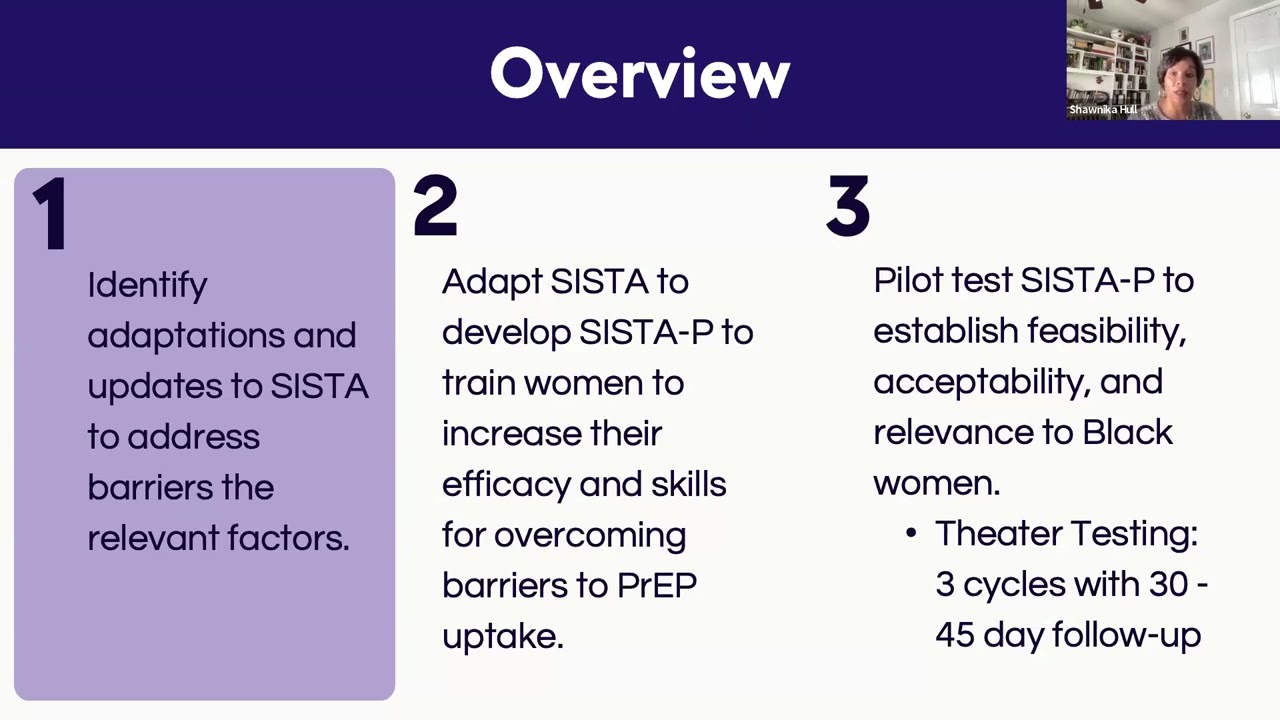
Talking Data Equity with Dr. Shawnika Hull and SISTA-P